
Why food delivery breaks down at the handoff between kitchen and rider
Logistics
Food & Beverages
Delivery
Food delivery delays are often caused not by distance, but by poor coordination between kitchens, riders, and real time demand. An AI driven delivery route optimization and kitchen allocation system can dynamically assign orders to the most efficient kitchen or rider based on prep time, kitchen load, and delivery ETA. This reduces delivery time, minimizes cold food complaints, and lowers last mile logistics costs.
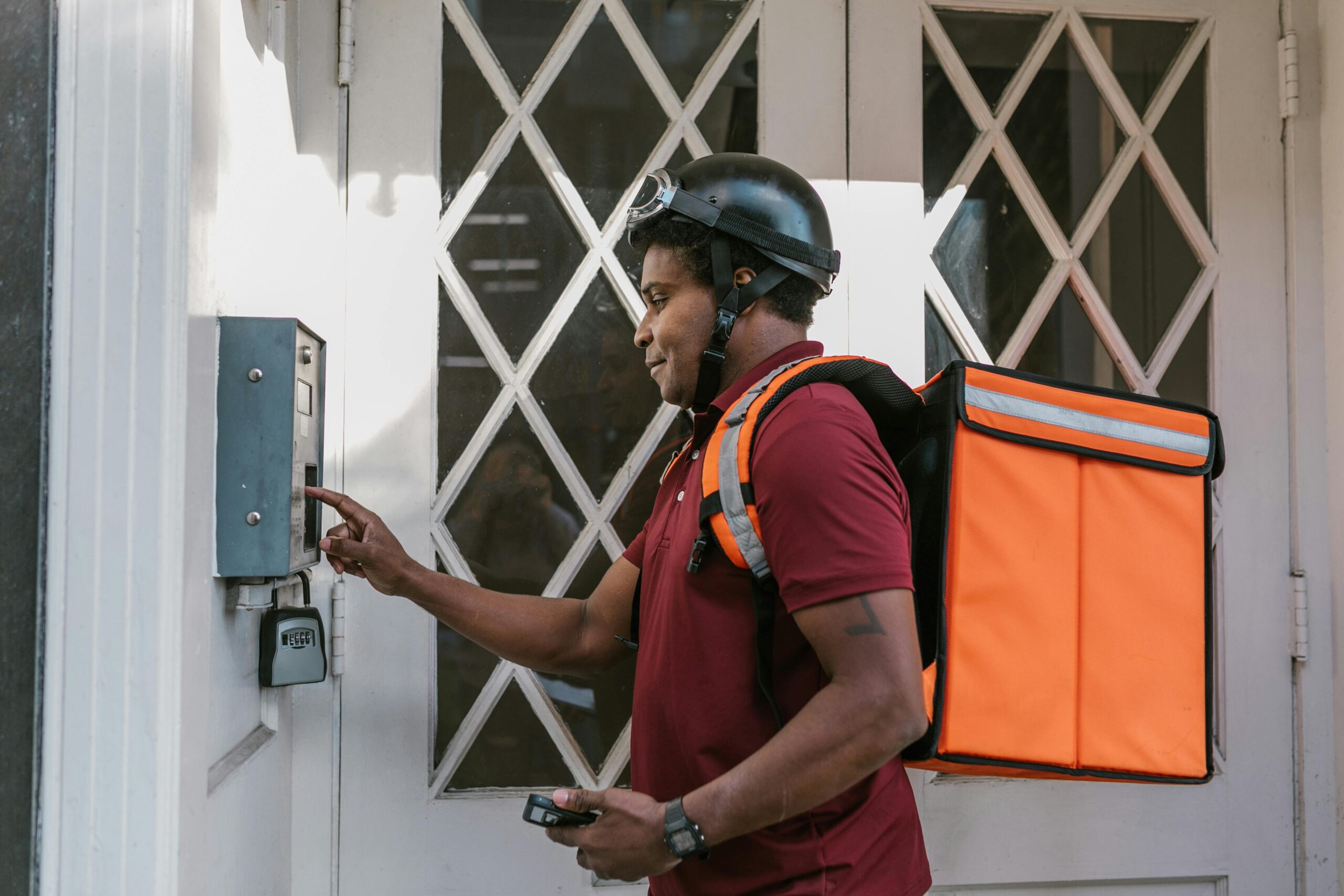
Most food delivery problems don’t start on the road.
They start in the kitchen.
An order is accepted by a location that is already overloaded. Prep time slips by a few minutes. A rider arrives too early or too late. The food waits. Then the customer waits.
From the outside, it looks like a delivery issue. Internally, it’s a coordination problem.
Cloud kitchens and multi location food brands operate in a constant balancing act. Multiple kitchens serving overlapping areas. Riders moving across zones. Demand spiking unpredictably. Decisions about where an order should be prepared are often made with partial information or static rules.
This is where AI driven optimization could fundamentally improve outcomes.
Instead of assigning orders based on proximity alone, an AI dispatcher could evaluate real time signals across the network. Kitchen load, current prep queues, historical prep speed, rider availability, traffic conditions, and delivery ETAs could all factor into a single decision.
The system could dynamically select the best fulfillment node for each order. Not the closest kitchen, but the one most likely to deliver the food fastest and hottest.
If one kitchen is overwhelmed, orders could be routed to another nearby location with spare capacity. If traffic builds unexpectedly, rider routes could be adjusted in real time. If demand overlaps across zones, fulfillment could shift seamlessly without manual intervention.
Over time, these micro decisions would compound into meaningful gains.
Average delivery times would fall. Cold food complaints would reduce. Kitchen workloads would become more balanced instead of spiky. Last mile costs would drop as routes become more efficient.
The biggest shift, however, would be operational clarity.
Operations teams would stop firefighting delays after they occur and start managing flow proactively. Kitchens would be judged not just on volume, but on contribution to overall network efficiency. Rider utilization would improve without increasing pressure or idle time.
This is not about squeezing more orders through the system. It is about aligning preparation, routing, and delivery as one connected process.
When kitchens and riders operate as a coordinated network instead of isolated units, food delivery stops feeling chaotic and starts feeling predictable.
And in this business, predictability is the difference between scale and burnout.
AI driven delivery optimization creates value when decisions consider the entire fulfillment network, not just distance on a map.
If every order could be routed to the best possible kitchen and rider in real time, where would your biggest efficiency gains come from?
#FoodDelivery #CloudKitchens #EnterpriseAI #LogisticsOptimization #OperationalEfficiency #Crizzen