
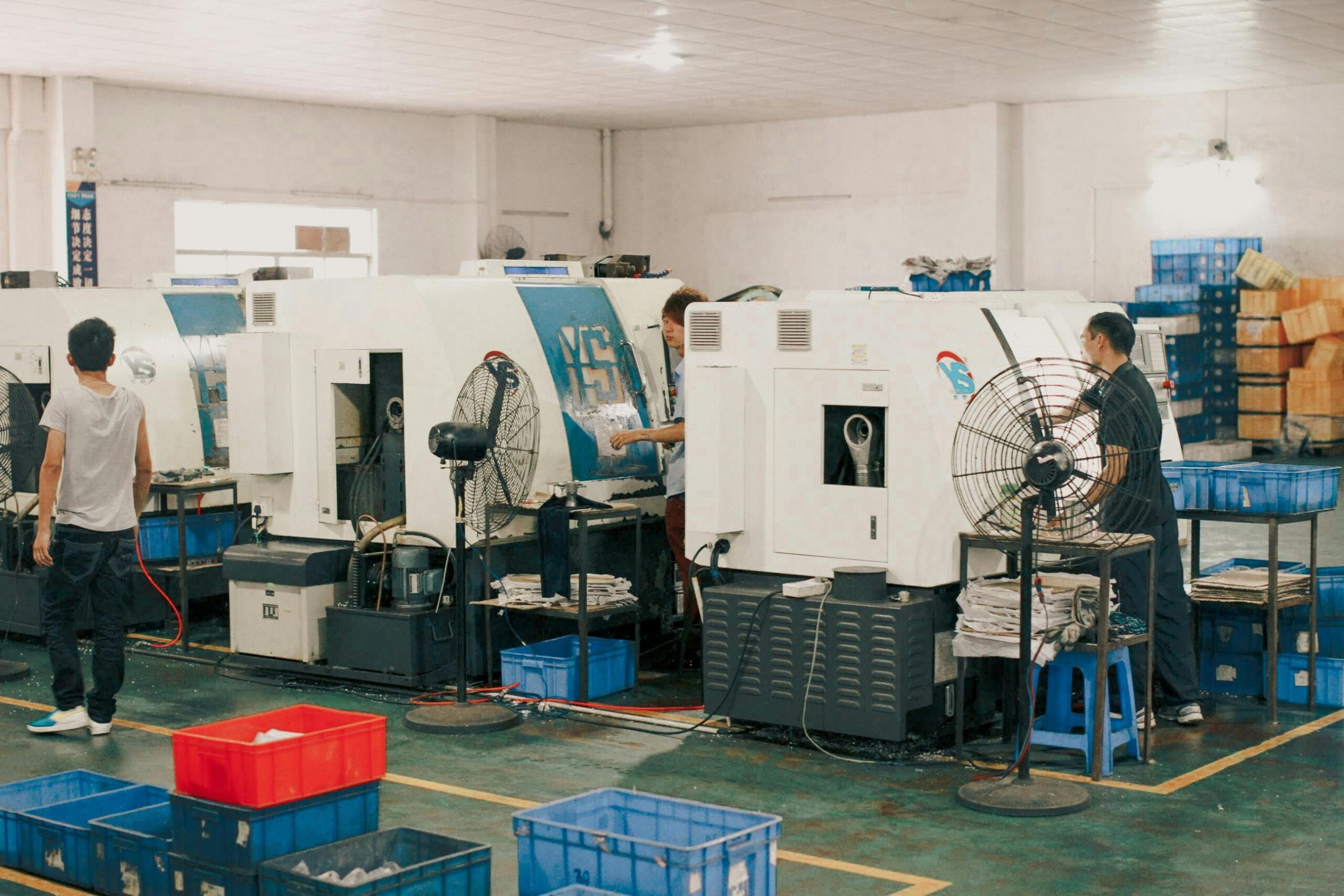
Why the Next Competitive Advantage in Manufacturing Will Come From Digital Twins and AI-Driven Scheduling

Manufacturing

Digital Twin

Production Scheduling

WorkView

Manufacturing has entered a phase where incremental improvements are no longer enough to maintain competitiveness. Enterprise AI adoption in the sector has jumped from 48% to 72% within a single year, signaling that intelligent automation is quickly becoming a baseline capability rather than an experimental initiative.

Two technologies are emerging as the structural backbone of this transformation: Digital Twins and AI-driven production scheduling.

Together they enable manufacturers to simulate operational decisions before they happen, dynamically adapt production schedules to real-world volatility, and dramatically reduce inefficiencies across the shop floor. Organizations that combine these capabilities with a centralized AI Center of Excellence are seeing measurable improvements in throughput, commissioning speed, and energy efficiency while minimizing operational risk.

Manufacturing Has Reached a Strategic Inflection Point

Manufacturing leaders are confronting a reality that was easy to postpone five years ago but impossible to ignore today. Operational optimization through traditional methods has reached its ceiling.

For decades, manufacturers have relied on incremental improvements: lean processes, Six Sigma initiatives, and increasingly complex planning spreadsheets. These tools delivered meaningful gains, but they were designed for relatively stable environments.

Today’s operating environment is anything but stable.

Supply chains are volatile. Demand fluctuates faster than planning cycles. Energy costs are unpredictable. Product customization is rising. And global competition is intensifying.

This is why enterprise AI adoption has surged from 48% to 72% in just one year. The conversation has shifted from experimentation to necessity. For the remaining 28% of manufacturers, the challenge is not simply slower growth. The risk is falling structurally behind competitors that are building intelligent, self-optimizing production ecosystems.

The companies gaining advantage are moving away from reactive problem-solving and toward predictive operational intelligence.

That shift begins with the Digital Twin.

Digital Twins: The “Brain” of the Intelligent Factory

A Digital Twin is far more than a digital model of a machine or production line.

It is a high-fidelity virtual replica of the physical production environment, continuously updated with real operational data. This virtual environment allows manufacturers to test and refine decisions before executing them on the shop floor.

Instead of discovering inefficiencies after production begins, manufacturers can simulate thousands of scenarios in advance.

This changes the entire operational philosophy of manufacturing.

Rather than relying on trial and error, organizations move toward mathematically validated optimization.

The strategic advantages are substantial.

Production ramp-ups can be accelerated because processes are validated before launch. Operational throughput can be continuously optimized as real-time data flows into the digital replica. Leadership teams can test “what-if” scenarios without interrupting live production.

Even sustainability goals become more achievable. By optimizing machine behavior through AI-driven models, equipment can operate closer to peak efficiency, lowering energy consumption and reducing overall carbon footprint.

A notable example of this approach at scale is the BMW Group. Working with Monkeyway and leveraging SORDI.ai on Google’s Vertex AI platform, BMW built 3D digital twins capable of running thousands of simultaneous simulations. These models allow the company to refine industrial planning and logistics decisions before they affect physical production systems.

But while Digital Twins provide predictive intelligence, they do not execute operational decisions themselves.

That responsibility falls to the factory’s operational nervous system.

Article content

AI-Driven Production Scheduling: The Nervous System of Modern Manufacturing

If the Digital Twin represents the strategic brain of the factory, AI-driven scheduling acts as the nervous system translating insight into action.

Traditional production scheduling systems are built around static planning assumptions. In many facilities, scheduling still depends on manual spreadsheets that cannot adapt quickly to disruptions.

This rigidity becomes a major liability when supply chains shift or demand signals change.

AI-driven scheduling systems operate differently.

These systems combine machine learning demand forecasts with advanced planning algorithms to continuously adjust production sequences. Instead of relying on static plans, the system dynamically recalculates optimal schedules based on current constraints.

The result is a much more responsive production environment.

Changeovers are minimized because AI sequences jobs to reduce tool or component switches. Idle time between operations decreases as machine utilization improves. On-time delivery becomes more stable because predictive analytics anticipate disruptions before they impact schedules.

Companies deploying these systems often find that they are not simply improving efficiency. They are recovering capacity that previously went unnoticed.

Solutions developed by companies such as Kinaxis and tulanā demonstrate how predictive analytics and intelligent scheduling engines can transform production planning into a continuously adaptive system.

Yet these capabilities cannot scale without the right architectural foundation.

Article content

Why Most AI Initiatives Stall Without an AI Center of Excellence

Many manufacturers begin AI initiatives with enthusiasm but struggle to move beyond isolated pilot projects.

The reason is rarely technological.

More often, the issue is organizational architecture.

Without centralized governance and standardized frameworks, AI projects become siloed experiments that cannot scale across the enterprise.

This is why successful manufacturers increasingly establish AI Centers of Excellence (CoE).

An AI CoE functions as the strategic command center for enterprise AI adoption. It bridges the gap between technical execution and operational decision-making while ensuring that projects remain aligned with business objectives.

At its core, the CoE combines expertise across multiple disciplines: AI strategists who define the adoption roadmap, data scientists who build analytical models, ML engineers who operationalize those models, and data engineers who maintain the underlying data infrastructure.

Governance structures such as executive steering committees and ethics boards provide oversight and ensure compliance with evolving regulatory standards.

Technologically, the CoE relies on scalable cloud infrastructure, centralized data lakes, and modern MLOps frameworks and scalable data infrastructure to manage the lifecycle of AI models.

Without this foundation, even promising AI initiatives often remain stuck in what many executives call “pilot purgatory.”

Turning Intelligence Into Operational Visibility with WorkView

While Digital Twins and AI-driven scheduling provide predictive intelligence, organizations still need a way to translate that intelligence into clear operational visibility across teams, plants, and leadership layers.

This is where operational intelligence platforms become critical.

Article content

Crizzen’s WorkView platform is designed to provide a unified operational lens across complex production environments. By integrating data streams from production systems, scheduling engines, and other department data sources, WorkView enables manufacturers to monitor real-time operational performance, identify bottlenecks, and evaluate the impact of scheduling decisions before they disrupt throughput.

In many organizations, platforms like WorkView also become the operational foundation for building AI Centers of Excellence, providing the visibility and data integration needed to scale intelligent decision-making across the enterprise.

Instead of relying on fragmented dashboards or post-production reports, leadership teams gain a continuously updated view of how decisions affect capacity utilization, production flow, and operational risk across the factory network.

In practice, this means that insights generated by AI systems do not remain isolated in analytics environments. They become visible, actionable signals embedded directly into day-to-day operations.

For manufacturers scaling AI adoption, this layer of operational visibility is what transforms intelligent models into consistent operational outcomes.

Addressing the Risks of Enterprise AI Adoption

While the productivity gains of AI in manufacturing are significant, implementation is not without challenges.

Organizations frequently encounter barriers ranging from inaccurate model outputs to regulatory compliance concerns and data security risks.

Recent research highlights the most common obstacles:

  • 64.2% of organizations worry about inaccurate AI outputs
  • 58.2% cite regulatory compliance concerns
  • 52.2% raise ethical considerations
  • 44.8% fear potential data leakage

Addressing these challenges requires structured mitigation strategies.

Explainable AI frameworks can improve transparency and trust in model outputs. Human-in-the-loop oversight mechanisms ensure that critical operational decisions remain auditable. Robust encryption and secure cloud architectures reduce exposure to data leakage risks.

Equally important is managing the cultural impact of AI adoption.

Studies show a strong correlation between AI deployment and workforce anxiety. If employees perceive AI systems as replacements rather than collaborative tools, resistance can slow implementation dramatically.

Successful manufacturers invest heavily in training programs that increase AI fluency across the workforce, enabling employees to participate in and benefit from the emerging “agentic” operational ecosystem.

Manufacturing’s Next Competitive Advantage

The integration of Digital Twins and AI-driven scheduling represents more than another technology upgrade.

It marks the transition toward autonomous manufacturing ecosystems.

By synchronizing predictive digital replicas with real-time operational execution, manufacturers gain unprecedented visibility and agility across their operations.

In an increasingly volatile global market, this capability is becoming a defining competitive advantage. Manufacturing organizations that embrace this shift will move beyond reactive troubleshooting and toward continuous operational optimization.

Those that hesitate risk watching competitors redefine efficiency, flexibility, and production intelligence.

AI in manufacturing is not a one-time deployment. It is an evolving system of experimentation, learning, and refinement. The companies that understand this will not simply adopt AI. They will build factories that continuously become smarter.

#Manufacturing #Industry40 #EnterpriseAI #DigitalTwin #SmartManufacturing #Crizzen

Leave a Reply

Your email address will not be published. Required fields are marked *

Workview Demo Form

Try TickL Beta Now